
7 Secrets Why Viral Slang is Rewiring Your Brain
Why can't you stop saying 'aura farming'? Explore the 2026 psychology of emotional compression, '6-7' gatekeeping, and the viral -maxxing craze.
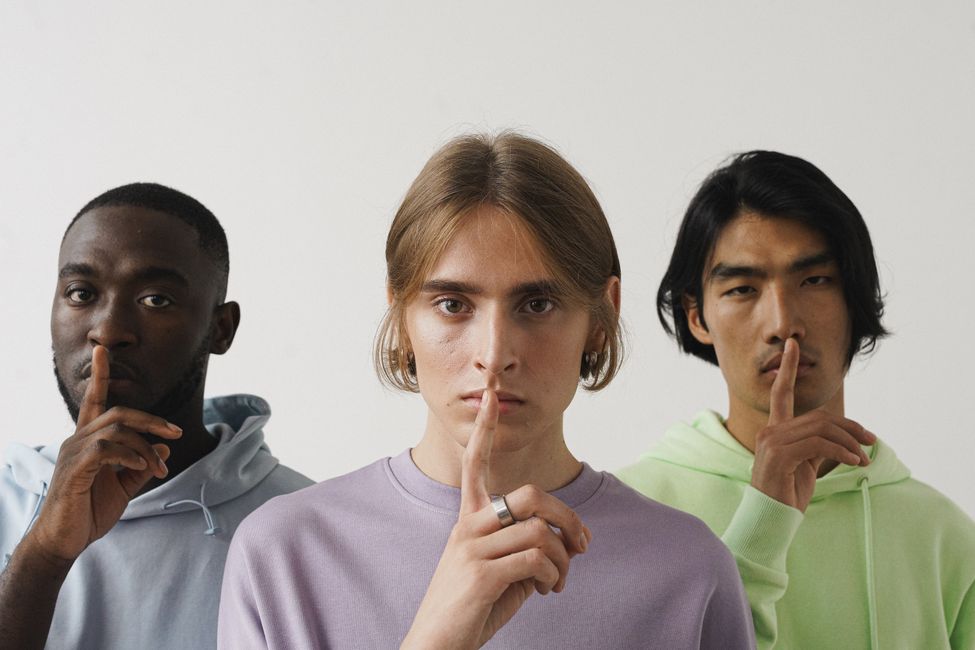
The Psychology of the Viral Vibe: Why Your Brain Craves New Slang
Ever caught yourself doing absolutely nothing at work and calling it an 'Mbappé special'? Or maybe you’ve spent the last three hours 'aura farming' on TikTok just to boost your perceived social status? If you feel like your vocabulary is changing faster than your FYP, you’re not imagining it. In 2026, slang isn't just a way of talking—it’s a psychological survival mechanism.
We are living through a linguistic revolution where the way we speak is being optimized, compressed, and algorithmically reinforced. But why? Why did 'maxxing' become the Word of the Year, and why does saying '6-7' feel like a secret handshake?
It turns out, there’s a fascinating science behind the nonsense. Recent neuroimaging research shows that using in-group slang triggers the exact same reward centers in your brain as receiving social praise. In fact, a staggering 88.9% of youth exhibit this 'conformity psychology.' When you drop a perfectly timed 'You the birthday' (describing someone as the main character), your brain gets a hit of dopamine that says, 'You belong.' Let’s dive into the matrix of how 2026 culture is rewriting the human dictionary.
The Suffix Revolution: Everything is a Metric
If 2025 was the year of the vibe, 2026 is the year of the metric. We have entered the era of the 'Suffix Revolution,' dominated by one word: -maxxing. What started as niche gaming terminology has evolved into a mainstream lifestyle descriptor. Whether it’s 'looksmaxxing' (optimizing physical appearance), 'tokenmaxxing' (maximizing digital assets), or even 'nonnamaxxing' (embracing the cozy, grandmother-chic aesthetic), the psychology remains the same: we are obsessed with optimization.
This trend reflects a deeper psychological drive to turn every aspect of human life into a trackable, improvable data point. In a world that feels increasingly chaotic, '-maxxing' gives us a sense of control. If you can name the process, you can master it. Dictionary.com didn’t name 'maxxing' its 2026 Word of the Year just because it sounds cool; they did it because it defines our collective obsession with progress. Not sure if your latest lifestyle pivot is actually a trend? You can use the Trend Translator to see if you’re actually 'vibe-maxxing' or just late to the party.
Emotional Compression: Words are Getting Smaller, Feelings are Getting Bigger
One of the most startling shifts in 2026 is 'Emotional Compression.' We no longer have the time or the attention span for literal descriptions. Instead, slang has shifted toward signaling 'how it feels' over what is actually happening. This is why phrases like 'Quiet on the Creek' have gone viral. It doesn’t literally mean there is a creek nearby; it’s a condensed emotional signal for laying low, keeping a secret, or maintaining a low profile. ✨
This compression allows us to communicate complex states of being in a single, efficient burst. When you tell a friend 'You the birthday,' you aren’t wishing them a happy birth anniversary—you are signaling that they are the center of the universe in that specific moment. It’s shorthand for 'I recognize your aura and your status.' This move away from literalism is a hallmark of Gen Alpha and late Gen Z communication. We are trading data-carrying words for emotional-carrying signals. It’s faster, it’s more punchy, and it creates a deeper level of intimacy between those 'in the know.'
Algorithmic Reinforcement: The Dopamine Trap
Wait, why do we all start saying the same thing at the exact same time? It isn’t just a coincidence; it’s 'Algorithmic Reinforcement.' Platforms like TikTok and IG now function as operant conditioning tools. When you use a viral term like 'aura farming' in a comment or a caption, the algorithm rewards you with visibility, and your peers reward you with likes. These are immediate dopamine hits that train your brain to adopt new linguistic markers almost instantly.
Your brain is literally being 'taught' to speak in viral patterns through intermittent reinforcement. This is why certain phrases feel 'stuck' in your head like a catchy song. However, this comes with a catch: the 'Cringe Threshold.' Because the algorithm pushes these terms so hard, they reach saturation point faster than ever before. If you’re worried that your vocabulary has already hit that peak, the Cringe Detector is a literal lifesaver for checking if your 'aura' is still intact or if you’re just 'slop-posting.'
Nonsense as Resistance: The Power of '6-7'
Perhaps the weirdest trend of 2026 is the rise of 'Nonsense as Resistance.' Think about the viral use of '6-7' or '41.' These are nonsensical numerical placeholders used to baffle outsiders and, more importantly, AI filters. Popularized by figures like the rapper Skrilla, '6-7' is a comedic interruption that means... well, whatever the in-group wants it to mean. ☑
This is a psychological gatekeeping tactic. By using terms that are intentionally meaningless to the uninitiated, Gen Z and Gen Alpha create exclusive digital spaces. It’s a linguistic password. A 2026 study revealed that only 7.6% of adolescents use this kind of slang when talking to their parents. This shows a high degree of 'linguistic code-switching.' We are effectively living double lives: one where we speak 'Standard English' to survive the 'real world,' and another where we use numerical nonsense to build community online. If you need to navigate these two worlds without looking like a narc, the Code Switch tool is your best friend for keeping your personas separate.
The 21-Day Death Cycle
Here is the 'wait, what?' moment: the average viral lifespan of a slang term in 2026 has plummeted to just 21 days. In less than a month, a word goes from 'peak cool' to 'utterly cringe.' This rapid turnover is driven by the sheer speed of digital consumption. Once a subculture creates a term, it is quickly harvested by 'aura farmers' looking for social clout, then adopted by brands, and finally used by parents. The moment it hits that 7.6% parental usage mark, the original subculture abandons it.
This creates a constant state of linguistic FOMO. We are perpetually searching for the next 'Mbappé special' or the next 'Quiet on the Creek' just to stay relevant. It’s exhausting, but it’s also why internet culture is so vibrant. We are in a constant state of creation, discarding the old to make room for the new. The psychology of 2026 slang isn’t about the words themselves; it’s about the speed of the cycle. We aren’t just talking; we’re racing.
Conclusion: Mastering the Aura
Understanding the psychology of viral slang is like having the source code for the internet. It’s about more than just 'staying young'—it’s about understanding how human connection is changing in a world dominated by algorithms and optimization. Whether you’re looksmaxxing your profile or just trying to figure out why everyone is shouting '6-7' in the comments, remember that language is the ultimate tool for belonging.
Don’t let the 21-day cycle leave you behind. Whether you need to check your vibe, translate a trend, or just avoid a 'cringe' moment, we’ve got you covered. Ready to level up your linguistic game? Head over to Slangify.me and start aura-maxxing your communication today!
Get the Latest Slang Updates
New posts, trends, and slang terms delivered weekly