7 Ways TikTok Is Rewriting the Dictionary in 2026
Is your vocabulary 'crashing out'? From 5,900-word dictionary drops to the global 'TikTok accent,' here is why you are speaking a new language. 🤯
Why You Are Speaking TikTok: The 2026 Guide to Viral Slang
You are not imagining it. The way we talk is changing faster than your FYP refreshes. We are officially living in the era of the TikTok-to-Dictionary pipeline, where a word goes from a niche comment section to a formal definition before you can even finish your iced coffee. In 2026, the timeline for slang to move from a creator's bedroom to the hallowed halls of Merriam-Webster has shrunk from years to mere weeks. We are talking about linguistic warp speed.
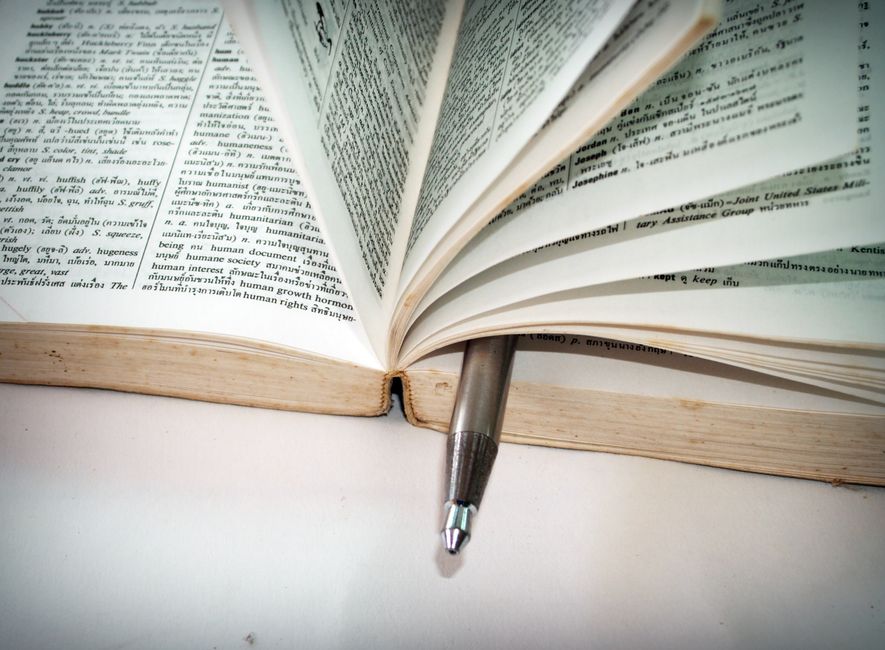
Remember when dictionaries were these dusty books that only updated once a year? Those days are dead. Dictionary.com literally broke the internet with its Summer 2026 update, adding a record-shattering 5,900 new words and definitions in a single 'word drop.' It is the largest in history, and it is almost entirely driven by what you are seeing on your phone. If you are feeling a bit behind, don't worry—you can use our Trend Translator to catch up before you sound like an 'Unc' in the group chat. 🤯
The Death of the Local Dialect
Here is a wild thought: whether you are sitting in a cafe in Barcelona, a subway in Seoul, or a bedroom in New York, you are probably using the exact same slang. This is what researchers are calling 'Linguistic Homogenization.' Because the TikTok algorithm serves the same viral content globally, a 'global youth dialect' has emerged.
Think about the term 'aura farming.' In early 2026, this term exploded simultaneously across the globe. It describes the act of performing specific tasks or curating an online aesthetic solely to increase your perceived coolness or 'aura points.' It is basically turning your real life into a video game. But the side effect? Regional slang is dying out. The FYP has become a 'digital empire' that erases local quirks in favor of a unified, internet-first English.
Are you losing your local vibe? It might be time for a quick Vibe Check to see how much of your speech is actually yours and how much is just the algorithm talking.
Lexicography at Warp Speed
How do dictionary editors even keep up? They have traded their dusty archives for 'Slang Radar' AI tools. These bots monitor Discord servers and TikTok comment sections in real-time, hunting for 'linguistic micro-tribes.' They are looking for the next 'saxophones are getting louder'—a phrase that saw a 12,959% surge in search interest in early 2026.
Wait, what? The saxophones? It started as a nonsensical viral audio, but within weeks, it became a dominant linguistic marker for 'things getting chaotic.' If you use it, you are in; if you don't, you are out. This is 'sprinting' language, and it is leaving traditional grammar in the dust. Lexicographers are now more like data scientists than bookworms, tracking how a word like 'Meaf' can be born from a simple hashtag typo.
The 'Tiktofication' of the Human Voice
It is not just the words we use; it is how we say them. Have you noticed people talking differently lately? There is a rising trend called the 'TikTok accent.' It is characterized by softened consonants and a very specific type of 'uptalk'—that rising inflection at the end of sentences that makes everything sound like a question or a high-energy hook.
Gen Z and Gen Alpha users are subconsciously emulating the tone of successful creators to keep people from scrolling past them in real-life conversations. It is a survival mechanism for the attention economy. We are literally re-tuning our vocal cords to match the algorithm. If you are worried your professional voice is starting to sound a bit too much like a 15-second clip, our Formality Meter can help you toggle back to 'Normal Human' mode. 💀
AI-Lexical Integration: When Humans Mimic Bots
2026 is also the year our language finally collided with AI. We are seeing a massive surge in vocabulary that describes the friction between us and the bots. Merriam-Webster's 2025 Word of the Year was actually 'slop'—referring to that low-quality, AI-generated content that clogs up your feed.
Then there is 'AI-washing' (falsely claiming you used AI to look tech-savvy) and 'tasteslop' (that specific, soulless AI aesthetic). But the coolest one? 'Vibe Coding.' It started as a technical term for using AI to generate code based on natural language 'vibes' rather than syntax, but now it is used for anything you create just by describing the feeling.
Language is becoming a bridge between human emotion and machine logic. But be careful—if you use too much AI-speak, you might trigger someone's Cringe Detector. No one wants to sound like a hallucinating chatbot. 🤖
The Corporate Cringe Cycle
Brands are struggling. Hard. In 2026, the window for a brand to use a slang term before it becomes 'cringe' has shrunk to about 48 hours. When a brand tries to talk about 'aura farming' or 'crashing out' (a term for a sudden emotional breakdown after digital hype), they usually end up looking like that 'How do you do, fellow kids' meme.
This 'Corporate Cringe Cycle' is why you see brands 'crashing out' their authority by trying too hard. The moment a term hits a corporate Twitter account, it is basically dead in the streets. This is why 'Meaf'—which was a total accident from the hashtag #meaf (me as f***)—stayed cool for so long; brands couldn't figure out what it meant until it was already a standalone adjective.
The New Game of Language
Ultimately, language in 2026 has become a game. Terms like 'Unc'—officially recognized this year as both a tease for being out of touch and a term of endearment—show how we use words to categorize each other in real-time. We are lookingmaxxing our vocabulary to stay relevant in an era where 'the saxophones' are always getting louder. 📈
So, are you keeping up with the pipeline, or are you still using 2024 slang? (If you said 'skibidi' recently, we need to talk). The dictionary is no longer a static record; it is a live-stream of our collective consciousness.
Don't get left behind in the linguistic dust. Whether you need to decode a cryptic comment or make sure your own posts have the right 'aura,' we have the tools to keep you fluent. Check out the full suite of Slangify Tools and start speaking the future today.
Get the Latest Slang Updates
New posts, trends, and slang terms delivered weekly