
Is Your Kid Speaking 6-7? 10 Slang Hacks for Parents 2026
Feeling like an 'Unc' in your own house? From Aura Points to Brain Rot, here is the ultimate 2026 guide to decoding Gen Alpha before you lose all your aura.
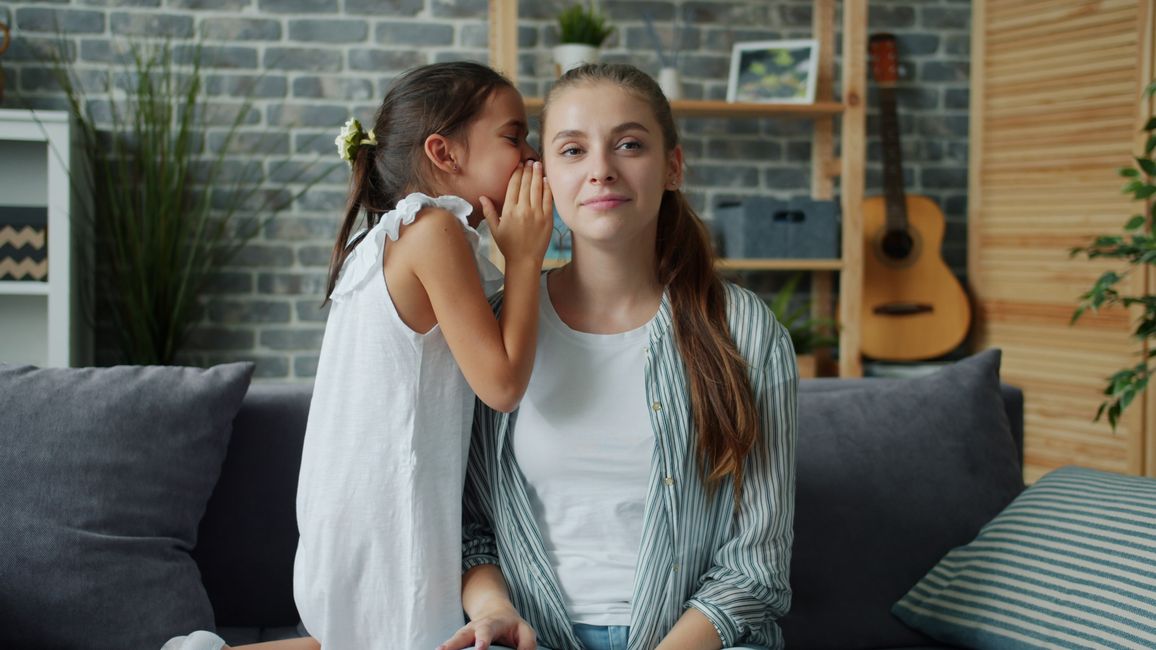
Is Your Kid Speaking 6-7? 10 Slang Hacks for Parents 2026
Wait, did your 14-year-old just call you an 'Unc'? 💀 Take a deep breath. You haven't aged decades overnight—but the language has. Welcome to 2026, where if you're over the age of 25, you’ve officially 'aged out' of the cool zone. It’s brutal, I know.
But here’s the thing: communication isn’t just about words anymore. It’s about vibes, social currency, and a weird obsession with numbers. If you feel like you’re reading a foreign language every time you check the family group chat, you aren’t alone. The slang cycle has accelerated so fast that a word can go from 'viral' to 'cringe' before you even figure out how to pronounce it. Have you ever felt like you needed a Rosetta Stone just to understand a dinner request?
If you're struggling to keep up, don't worry. Our Vibe Translator is the secret weapon you need to stop the eye-rolling.
Welcome to the Age of the 'Unc'
Let’s start with the most painful truth of 2026: 'Unc.' Short for Uncle, this isn’t a term of respect for your favorite relative. It’s the label Gen Alpha (who are now turning 16 and wielding a massive $100 billion in spending power) slaps on anyone who looks or acts 'old.'
If you’re still using the 'laughing crying' emoji (😂) or—heaven forbid—ending a text with a period, you’re an Unc. It signals that you’re from the 'old world' of the internet. The barrier for entry into 'youth culture' has never been higher, and the exit door is swinging faster than ever. Does your current emoji usage make you look like a digital dinosaur?
But don't panic! You can still be a 'cool Unc.' The key is understanding that language in 2026 is a defense mechanism. It’s designed to exclude adults and algorithms alike. When they use these terms, they aren't just talking; they're gatekeeping their culture.
The Aura Economy: Social Standing as an RPG
Have you heard your kid talking about 'losing aura'? It sounds like something out of a fantasy novel, but in 2026, it’s the only currency that matters. Aura Points are a gamified way of tracking social status in real-time.
Think of it like a live-action RPG (Role-Playing Game). Every action has a point value assigned by the peer group:
- •Tripping in the hallway? -50 Aura.
- •Getting a clutch win in a game? +100 Aura.
- •Asking the teacher a question after the bell rings? -1000 Aura (instant 'Unc' status).
- •Carrying an extra charger for a friend? +20 Aura.
This 'Aura Economy' is how kids navigate their social circles. It’s not about being popular in the traditional sense; it’s about maintaining a specific 'vibe' of effortless coolness. When kids 'score' each other, they are reinforcing community bonds. If you're worried your kid's 'Aura' is in the negatives, you might need a Vibe Check to see what’s really going on.
Decoding the '6-7' Mystery: Nonsense as Privacy
If you ask your child 'What do you want for dinner?' and they respond with '6-7,' they aren't doing math. They are practicing 'Nonsense as Defense.'
Derived from a viral 2026 drill song called 'Doot Doot,' the phrase '6-7' (six-seven) has become the ultimate conversation stopper. It’s a punchline that means absolutely nothing and everything at the same time. It’s a way to signal, 'I’m in on the joke, and you aren't.' Ever felt like your kids are speaking in a code that even the CIA couldn't crack?
Wait, what? Why would they want to speak in nonsense? Because in a world of constant surveillance and AI data-scraping, nonsense is the only thing that can't be tracked or marketed to. It’s a way for kids to reclaim their privacy. When they use these purposefully ambiguous terms, they are creating a 'digital living room' where only their inner circle is invited.
If you're tired of being left out, try our Generation Translator to decode the latest nonsense before it becomes 'cringe.'
AI as the New Digital Confidant
In 2026, AI isn't just a tool for writing essays; it’s a family member. Kids are 'AI-Native,' meaning they don’t see chatbots as software—they see them as social coaches.
Struggling with a crush? Ask the AI for a script. Not sure if an outfit has 'aura'? Upload a photo for a vibe check. This shift is massive. Nearly 40% of teens report being online 'almost constantly,' and a huge chunk of that time is spent interacting with AI that mirrors their own slang back to them. Is your child's best friend a chatbot, or are they just using it to level up their social game?
This creates a feedback loop where slang evolves even faster. The AI learns the slang, the kids learn from the AI, and the cycle repeats. As a parent, the goal isn't to ban the AI, but to guide it. You want to make sure they aren't losing their human touch while they 'Lock In' (focus intensely) on their digital lives. If you need to make sure your own advice doesn't sound like a robot, try our Authenticity Shield.
Brain Rot and the 'Aggressive' Thumbs Up
Let’s talk about 'Brain Rot.' It’s a term kids actually use to describe their own burnout. After hours of scrolling through 'Skibidi' style videos or meaningless short-form content, they feel their brains 'rotting.' It’s a self-aware acknowledgment of digital fatigue.
But here’s the plot twist: while they’re okay with 'Brain Rot,' they are absolutely NOT okay with the Thumbs Up emoji (👍).
In 2026, the 'Thumbs Up' is officially considered digital aggression. To a teen, it’s the equivalent of saying 'I don't care, shut up.' It’s passive-aggressive and cold. If you want to show approval, use the 'melting face' (🫠) for burnout or the 'sparkles' (✨) for something cool. Have you accidentally started a digital war with a single emoji?
Not sure if your message sounds like a digital slap in the face? Run it through our Cringe Detector before you hit send.
Where the Magic Happens: Semi-Private Spaces
Public social media is effectively 'dead' for Gen Alpha. They aren't posting on public Instagram feeds or making public TikToks as much as previous generations. Instead, they’ve moved to 'Digital Living Rooms'—semi-private spaces like Discord servers and WhatsApp communities.
This is where niche sub-dialects are born. It’s also where they 'Crash Out' (lose their cool) or 'Lock In' with their friends. Because these spaces are private, they feel safer to experiment with language that is intentionally confusing to outsiders.
As a parent, your job isn't to kick down the door of the digital living room, but to understand the rules of the house. Use 'curiosity over correction.' Instead of asking 'What does that mean?' try asking 'How do you gain aura in that group?'
How to Survive 2026 Without Losing Your Mind
The goal isn't to talk exactly like your kid. In fact, if you start saying '6-7' at the dinner table, you’ll probably lose 5000 Aura points instantly. The goal is connection.
Language is the bridge. By understanding the 'Aura Economy' and recognizing the signs of 'Brain Rot,' you’re showing your kid that you see their world. You don’t have to be a 'Skibidi' expert to be a great parent—you just have to be willing to learn. Are you ready to bridge the gap between 'Unc' and 'Aura'?
Ready to level up your parenting game? Check out the full suite of tools at Slangify to stay ahead of the curve. Whether you need a Reply Wizard to craft the perfect non-cringe text or an Emoji Oracle to avoid accidental aggression, we’ve got your back.
Don't be an Unc. Stay connected at https://slangify.me
Get the Latest Slang Updates
New posts, trends, and slang terms delivered weekly